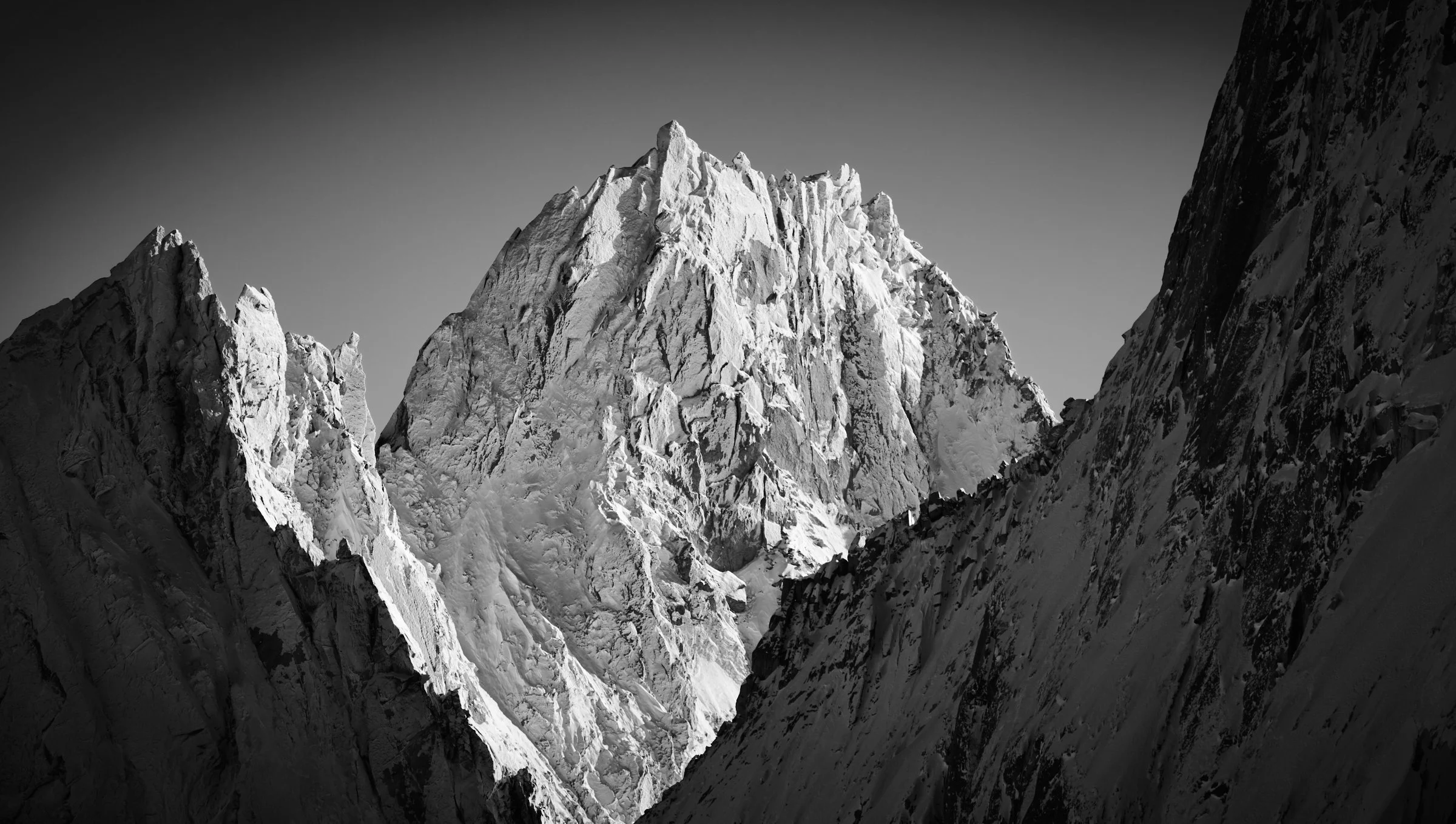
High Alpine Photography Retreat

In January, I was sitting in the studio with Manuel and we were thinking: suppose we were to do a photography workshop. How would we like to do it? What would we like to share?
The range of photo trips and photo workshops has grown immensely in recent years. But a lot of it is less appealing to us personally.
In the Engadin, for example, there are countless photo tours and workshops every year. Almost everyone rushes across the valley to the same places (Lej da Staz, Saoseo, Maloja Pass, Lake Sils, ...) and often produce the same pictures.
So - we agreed - if we were to do it, we would definitely do it differently. A retreat instead of a chase. Full concentration on the essentials. Thinking carefully instead of blindly running after things.
Six months later, we have primarily thought carefully ourselves and worked out three workshops.
So how about:
3 days at 3000 meters in the middle of the high mountains with the Diavolezza mountain station as a base camp. In winter. Surrounded by snow and ice. March 7 to 9, 2025.
With 100% focus on quality and concept, from preparation to photography - right through to curating. The aim: to take time on location to first observe the landscape and the light intensively and to develop a deeper, more meaningful understanding of what I observe, instead of simply copying motifs that have been photographed thousands of times; to consciously ask myself what I am actually really interested in, what I see (and how). Which image I would really be satisfied with deep down inside. So the focus is on my own experience.
Landscape photography in the way that Hélène Binet photographs architecture. With a lot of time and understanding for the location and even more feeling for atmospheres and light.
The Diavolezza as a location offers us a number of advantages. We can retreat to the top, but still have everything we need. We specifically include the path up to the mountain station as part of the workshop experience.
It is also a much-visited and much-photographed location - which offers a lot of potential for capturing individual perspectives.
And above all, thanks to the Glaciers.Today project, we now have an image archive from over a year there. This means we know every conceivable light and weather condition, which will immensely help us in planning and visualizing ideas.