
Hidden Time – What the Ice at Morteratsch Tells Us
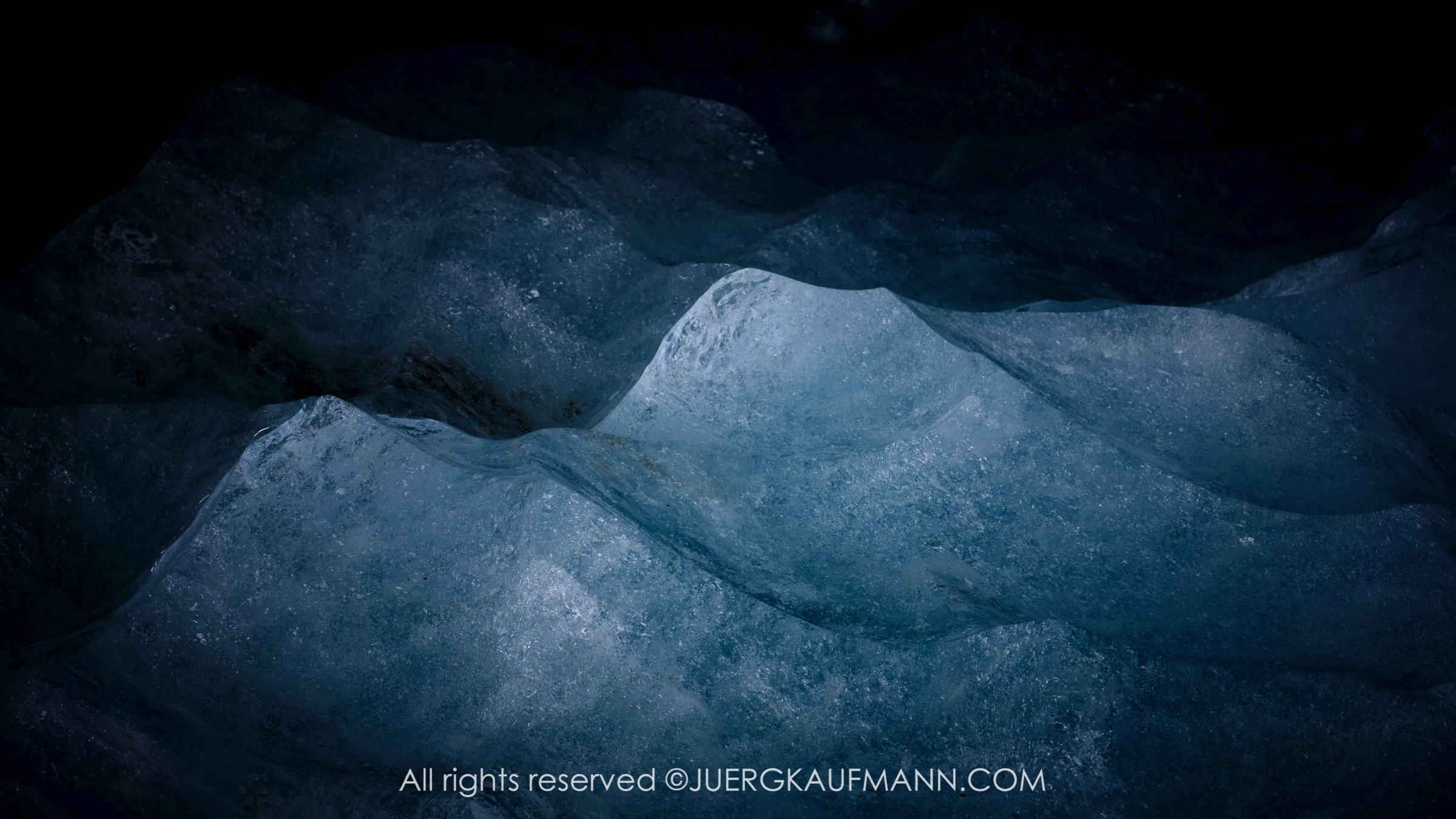
Anyone standing at the lower end of the Morteratsch Glacier and looking into the blue twilight of the ice cave is not merely gazing at a landscape. They are gazing into time. According to scientific measurements, the ice exposed here at the Glacier Gate is up to 1,800 years old. It formed in an era long before the first monastery chronicles were kept in the Alps.
As a photographer who has been documenting glaciers for over a decade, I have learned to see them not just as landscapes, but as time capsules. The ice cave at Morteratsch is one of the few places in Switzerland where you can see this depth with your own eyes, touch it, and literally step inside it.

A Living River of Ice
The Morteratsch Glacier in the Swiss Alps is one of the most accessible and well-studied glaciers in the region. It flows down from the heights of Piz Bernina into the valley, stretching over 7 kilometers and holding an archive of Earth's recent climate history. From the freshly fallen snowflakes in its upper reaches to the ancient ice layers at the glacier's end, every part of this glacier tells us something about our changing planet.
How Glacier Ice Ages
Every winter, fresh snow piles up in the high alpine areas. Over time and under pressure, this snow turns into firn, and eventually into compact glacier ice. As more snow accumulates, the older layers get pushed down and slowly start flowing downhill. This means the ice at the lower end of the glacier – in what's called the glacier tongue area – could have started out as snow over a hundred years ago.
At Morteratsch, the surface ice layers near the tongue are often dated back to the mid-19th century, which was during the so-called 'Little Ice Age.' Deeper ice layers at the glacier's base – now visible through melting ice caves – can be much older. Scientific measurements date this basal ice to be up to 1,800 years old.

The Basal Layer:
Ice from Another Time
At Morteratsch, the base layer is often exposed in ice caves near the glacier tongue, where meltwater has carved tunnels into the ice. The crystal-clear base ice visible there is particularly dense, bluish, and in places almost bubble-free. In other areas, fine networks of trapped air bubbles can be observed—tiny samples of the atmosphere, frozen in time.
Because the basal ice flows very slowly and is insulated by overlying layers of ice, it can remain intact for much longer than ice near the surface. Samples from Morteratsch have shown that this ice is up to 1,800 years old—meaning it formed long before the beginning of modern historical records. This deep layer of ice contains valuable clues about past climate conditions, the composition of the atmosphere, and the glacier’s centuries-long journey from its source areas down into the valley.

And the Air Bubbles in the Ice?
If you’ve ever seen crystal-clear glacier ice with tiny bubbles inside it, what you’re actually looking at is ancient air. These bubbles formed when the snow was still porous and were gradually trapped as the ice became denser. We’re not just standing on ancient ice—we’re also looking at preserved samples of the atmosphere from that time.
These preserved air bubbles help scientists understand how Earth’s climate and atmosphere have changed over time. Even the smallest pieces of ice can provide clues about past CO₂ concentrations, volcanic eruptions, or air pollution.
The Morteratsch Glacier: A Case Study
The Morteratsch Glacier in the Bernina region provides a striking illustration of the dynamics of Alpine glaciers. During the last Ice Age, around 20,000 years ago, it was part of the Inn Glacier system. About 14,000 years ago, it still extended into the Bernina Valley with a thickness of around 400 meters. In the early Holocene, about 10,000 years ago, it reached nearly the present-day town of Pontresina. During the “Little Ice Age” around 1850, it made its final advance, extending almost to the present-day Morteratsch train station. Since systematic measurements began in 1878, the glacier has retreated by over 2,600 meters.
Frequently Asked Questions About the Morteratsch Ice Cave
How old is the ice in the Morteratsch Ice Cave?
According to scientific measurements, the base ice of the Morteratsch Glacier is up to 1,800 years old. The ice near the surface at the glacier’s terminus mostly dates from the 19th century.
Where is the ice cave on the Morteratsch Glacier located?
It is located at the glacier entrance below the glacier tongue, about a 60- to 75-minute walk from the Morteratsch train station (Rhaetian Railway, Bernina Line).
How do I get to the Morteratsch Ice Cave?
Take the Rhaetian Railway to Morteratsch, then walk along the signposted glacier trail into the valley. The route is easy and well marked.
Is it safe to enter the ice cave?
Only with caution. Ice caves are dynamic structures that pose a risk of falling ice and collapse. Enter the cave only if you are fully aware of the risks, ideally with a local guide.
The ice cave at Morteratsch is more than just a natural phenomenon—it is a window into a time we can only glimpse through data and images. What it reveals is neither reassuring nor disturbing. It is simply what it is: 1,800 years of ice, exposed for a few summers in our time before it continues to melt.


