
Two Years of Glaciers.Today – an Update with a Look to the Future
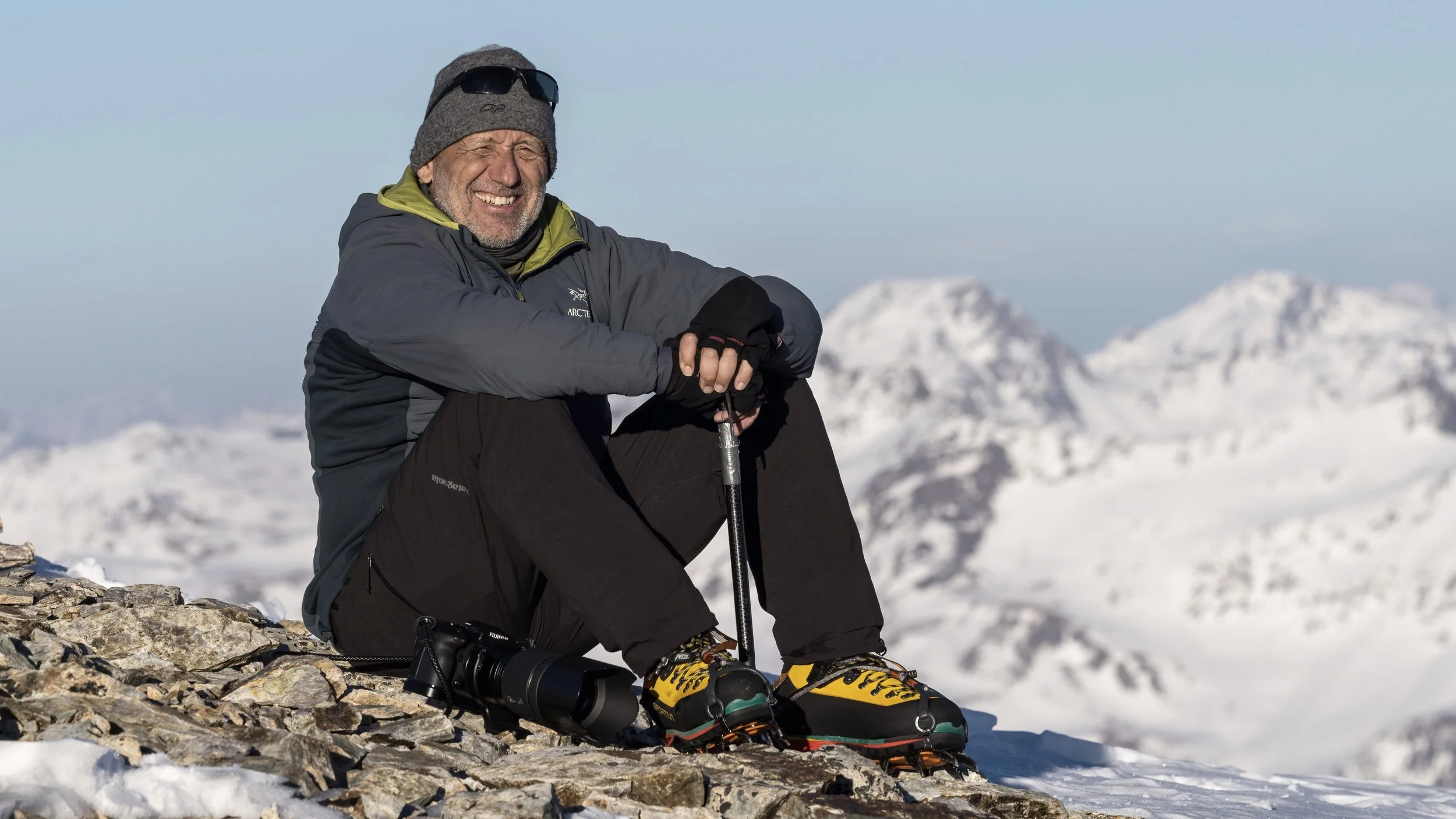
Photo: Phil - Philography
In just over a month, we’ll be celebrating two years of Glaciers.Today—live and uninterrupted. The idea for the project, however, originated many years earlier. We now have an built up an online archive with over 30,000 high-resolution images . Today, we can closely observe exactly what is happening on the glacier—at any time of day.
So precise that even mountain rescue teams now use our images.
People often ask me, “Why do you do this? Does it even make sense?”
Perhaps not in the short term. But anyone who looks at nature from a long-term perspective quickly realizes: it doesn’t operate on quarterly reports. It doesn’t have to justify itself every month. And yet it never sleeps—it changes quietly, powerfully, and steadily.
This process of change is strikingly beautiful in its honesty and depth. It is not loud or flashy, but rather unstoppable, genuine, and unaffected by trends, likes, or media hype. That is precisely why an objective, neutral view of nature is more valuable today than ever before.
But what does “neutral” even mean? What is “real”? What is “objective”?
I’m convinced that these questions will occupy us far more in the future than we’d like today. Last year, I learned how to create images using artificial intelligence—to “prompt” them. And just recently, AI video generators were unveiled whose quality far exceeds what we could have imagined even a year ago.
What can we still believe in the future—and what can’t we?
Nature shows us this. It has no political agenda; it is not funded by investors. That is why we need clear, fact-based information—so that we, as a society, can make sensible long-term decisions.
“Glaciers are our planet’s giant thermometers. They show us, in all their starkness, the impact of climate change.”
My photographs cannot explain the causes of this change—that is the task of science.
But the change itself—that is what my photographs can show.
We humans often see ourselves as the center of everything. Yet nature operates on different timescales and scales. It does not need us—we need it.
What particularly fascinates me about the location of the cameras on Diavolezza is not only the breathtaking landscape, but also their proximity to the Piz Corvatsch weather station.
In late July and August—the hottest days of the year—we will be able to compare the data from the past three summers for the first time.
Thanks to the high-resolution images of Piz Bernina and the Biancograt, we can clearly see how nature changes even at altitudes of around 4,000 meters.
It takes more than three summers to make meaningful comparisons—but this is a good start. And we plan to continue the project for many years to come.
Link to the Piz Corvatsch weather station:
meteoschweiz.admin.ch – Station COV

In the meantime, I cordially invite you to enjoy our new video.
From over 30,000 shots, I selected 600—and used the 50 most striking ones to create a visual journey.
Jürg
