
Albedo Effect, Dark Rocks, Melting Ice
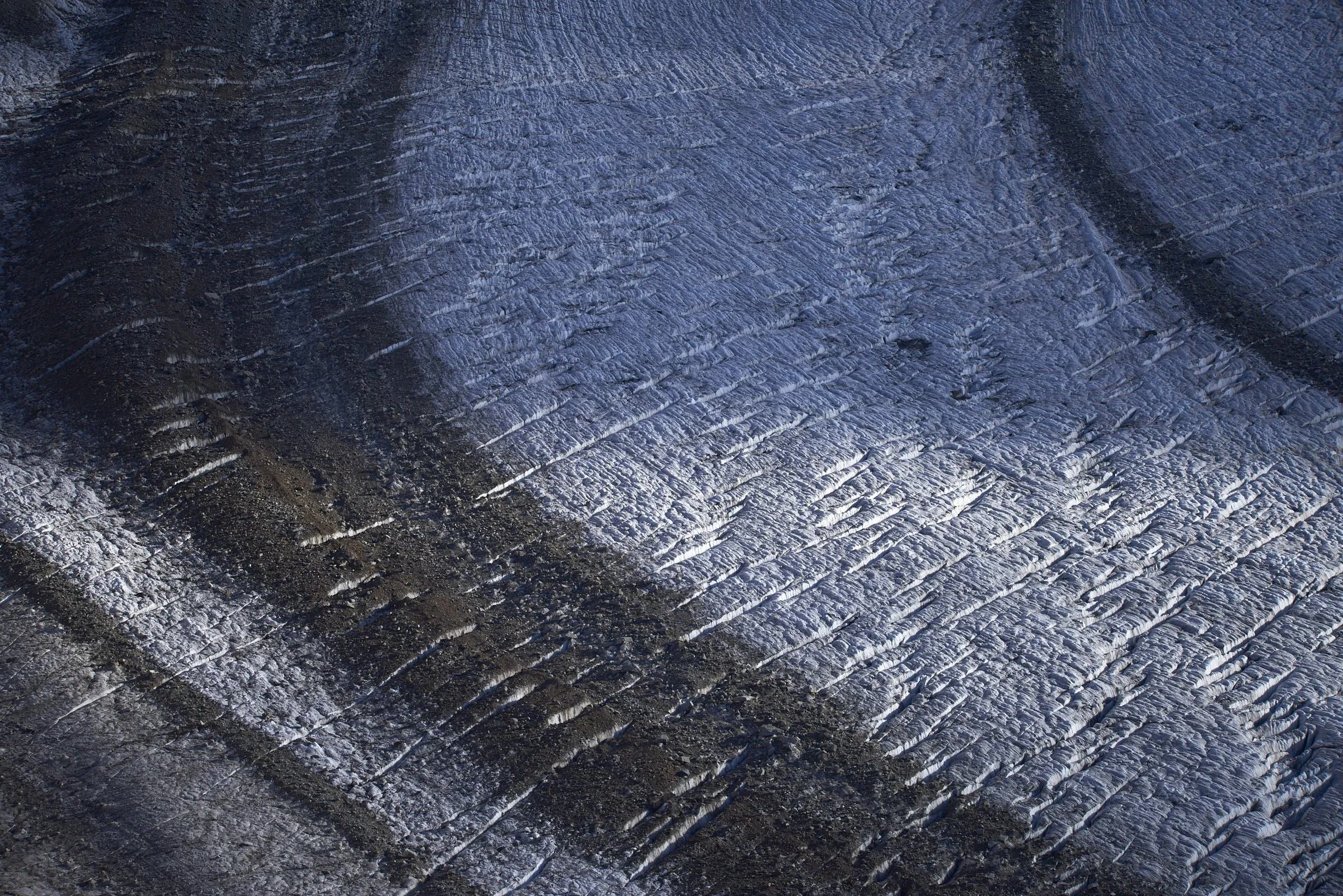
Rock deposits on the Pers Glacier, visible in summer until the first snow falls Photo © Jürg Kaufmann
Application of Max Planck's blackbody law to glaciers
How dark rocks on glacier surfaces absorb solar radiation, heat up according to Planck's blackbody law, and accelerate ice melt through thermal conduction—a phenomenon known as the albedo effect.
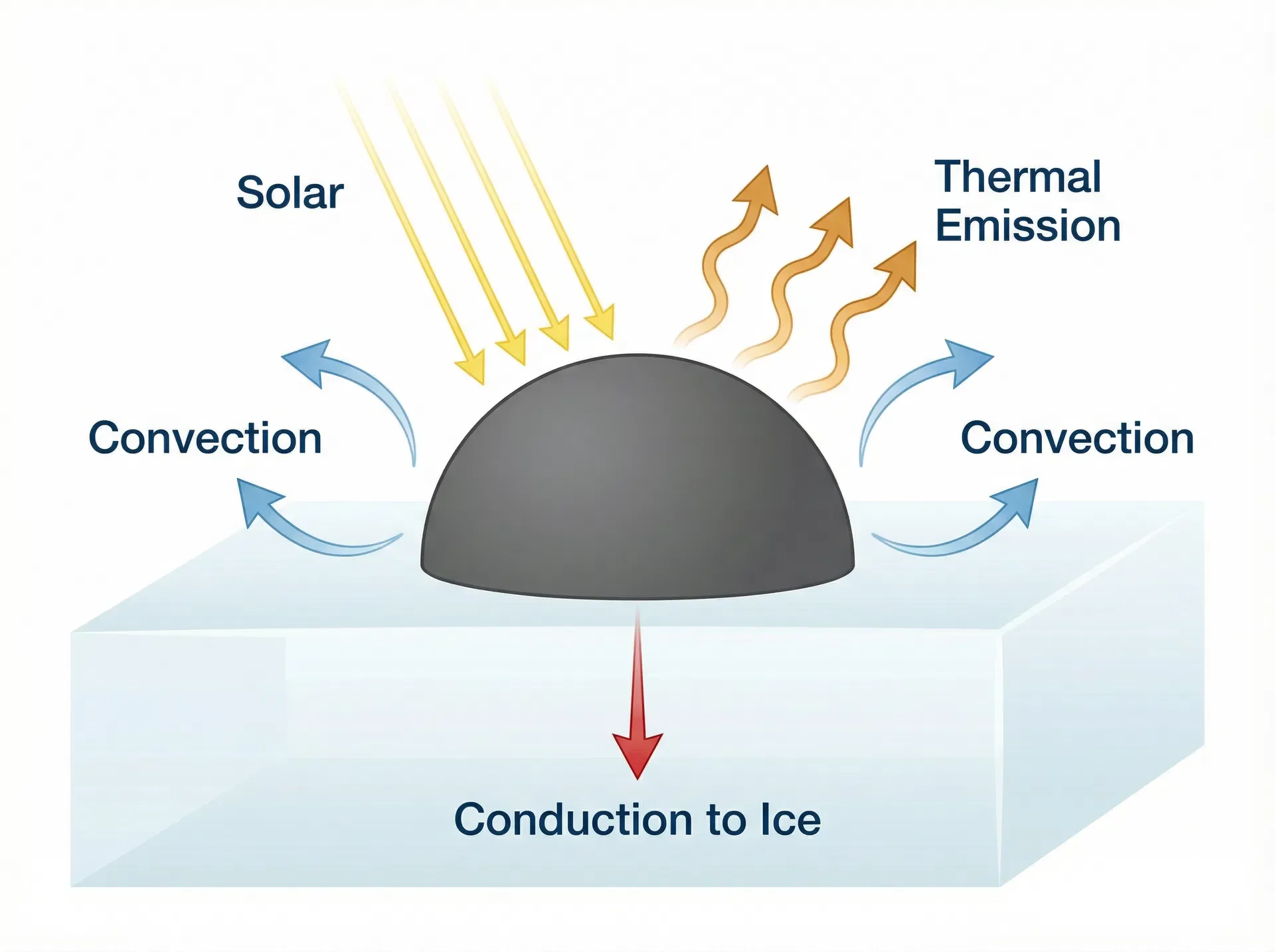
From solar absorption to ice melt: a complete energy balance
When dark rocks lie on the surface of a glacier, they absorb far more solar radiation than the surrounding ice or snow. A dark rock absorbs over 90% of the incoming sunlight, while snow reflects up to 90%.
Once heated by the sun, the rock must release this energy. It does this in three ways: it radiates infrared heat upward (described by the Stefan-Boltzmann law, the integral of Planck’s blackbody function), it loses heat to the surrounding air through convection, and, crucially, it conducts heat downward into the ice on which it lies. It is this last process that causes the glacier to melt.
The rock reaches an equilibrium temperature at which the energy absorbed equals the energy released. At this temperature, the proportion of energy flowing into the ice determines the melting rate.
Interactive Calculator
The calculator below lets you explore how grain size, rock type, solar intensity, and wind conditions affect this energy distribution and the resulting ice melt.
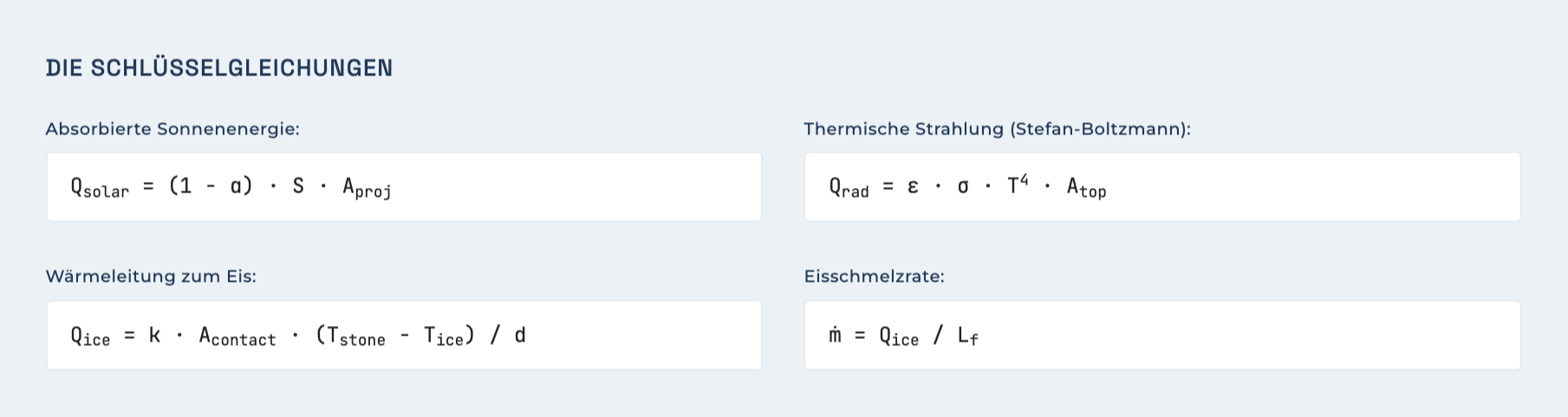
Adjust the parameters to see how each factor affects the stone temperature and the ice melt rate.
